Shaky and Sweating While Dieting? 3 Low Blood Sugar Warning Signs
Sudden shaking, palpitations and sweating during weight loss are not always hypoglycaemia — they can also reflect postural hypotension, caffeine or a stress response. However, when several symptoms appear together, or when there is blurred vision, slurred speech or repeated episodes, you should stop, take sugar and seek help. This article uses a TCM lens on the spleen-stomach generating qi and blood to outline the three levels of hypoglycaemia warning signs commonly seen during dieting, what to do immediately, and when a Western medical workup is needed first.
Medical review: Dr. To Ching, Jenny,Registered Chinese Medicine Practitioner #009330
1-Minute Quick Answer
Shaking, palpitations and sweating while dieting are not always low blood sugar; postural hypotension, caffeine or stress can feel similar. If alert, take 15 g of fast-acting sugar and reassess after 15 minutes. Blurred vision, slurred speech or repeated episodes need medical attention first (reviewed by Dr To Ching, CMCHK 009330).
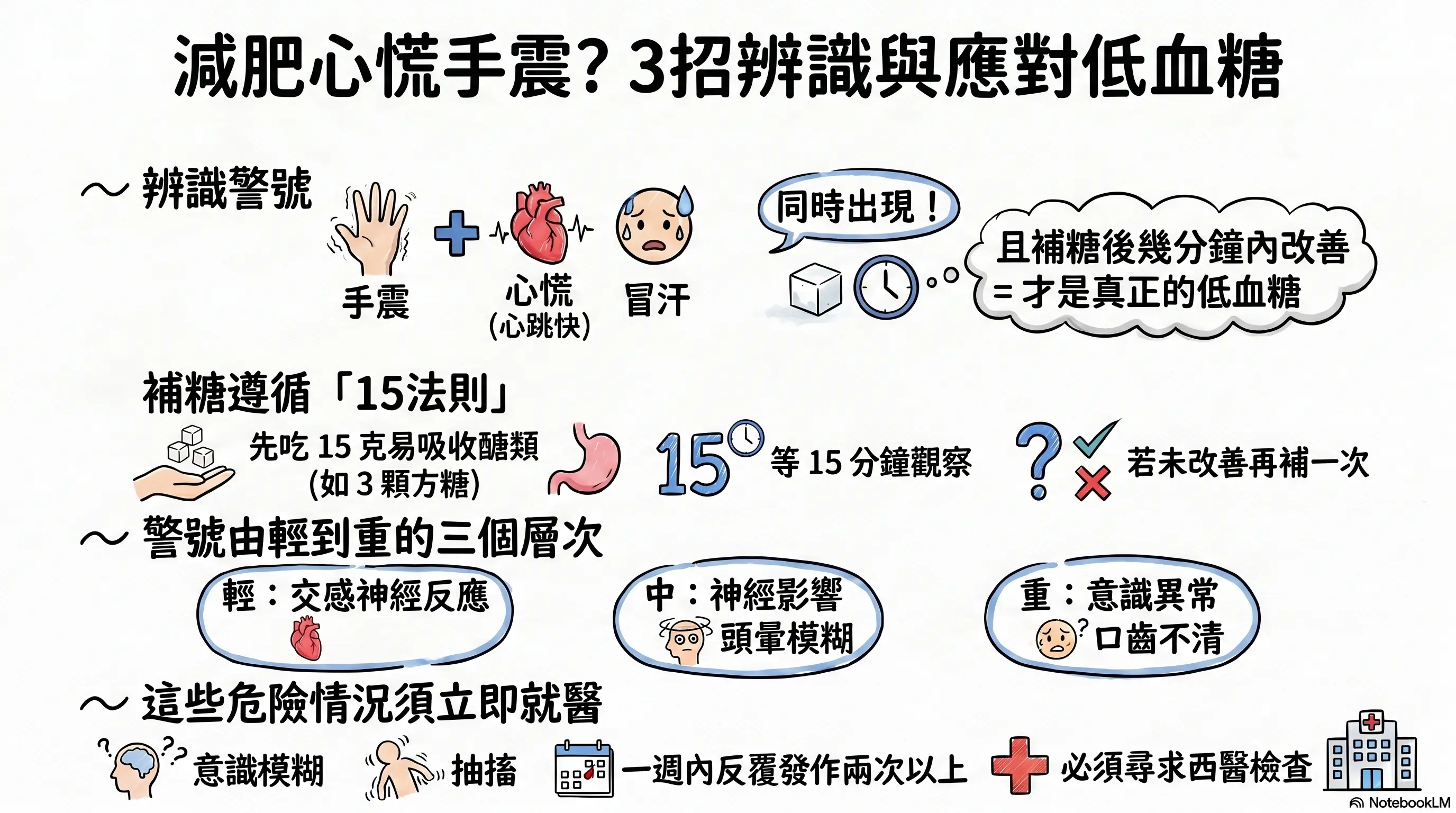 For quick reference, this image was generated by NotebookLM. Some Chinese characters may not render perfectly; we appreciate your understanding.
Many people on calorie restriction, intermittent fasting or low-carb diets have lived this scene: at three or four in the afternoon, fingers begin to tremble, the heart races and the forehead breaks out in sweat, sometimes with dizziness and a loss of focus. The reflexive response from friends and family is, "It's definitely low blood sugar — eat a sweet and you'll be fine."
In reality, it is not that simple. Tremor, palpitations and sweating during weight loss may be true hypoglycaemia, but they may also be postural hypotension, caffeine or a stress response — each calls for a different response and a different threshold for medical attention. Reaching for sugar at every discomfort can waste a calorie deficit; failing to treat true hypoglycaemia, on the other hand, may progress to blurred vision, slurred speech and altered consciousness.
This article will help you separate the three common causes of shaking, palpitations and sweating; outline the three layers of hypoglycaemia warning signs; show when to stop dieting and replenish glucose immediately; identify the situations in which TCM is not enough and a Western workup must come first; and explain how TCM, through the lens of the spleen-stomach generating qi and blood, can support a return to a stable eating rhythm.
Note: This article is general adult health education and does not substitute for acute diabetes management or paediatric dietary guidance. If you have been diagnosed with diabetes and are on glucose-lowering medication or insulin, follow your prescribing doctor's advice. Any change in medication or insulin dose must be discussed first with your prescribing doctor.
Shaking, Palpitations and Sweating Are Not Always Hypoglycaemia: First Distinguish 3 Acute Reactions
People in a phase of reduced eating, raised activity or irregular timing will feel unfamiliar signals from the body. The following three reactions look similar but arise from different mechanisms.
| Acute reaction | Typical context | Typical picture | Immediate direction |
|---|---|---|---|
| True hypoglycaemia | Delayed or undersized meal, fasted exercise, unchanged diabetic medication with reduced intake | Shaking + palpitations + sweating + hunger; clearly relieved within minutes after sugar | Take fast-acting carbohydrate and monitor |
| Postural hypotension | Standing up quickly from squatting, getting out of bed, leaving a hot shower | Brief dizziness or blacking out that resolves within seconds; no palpitations or hunger | Slow your movements, hydrate; no immediate sugar required |
| Caffeine or stress response | Coffee on an empty stomach, energy drinks, sleep deprivation, high-pressure meeting | Fast heart rate, fine tremor; no relief after sugar | Reduce caffeine, hydrate, address the stressor |
Clinically, classic hypoglycaemia symptoms typically appear when blood glucose falls below 70 mg/dL; in people with previously high glucose, a rapid drop can produce "pseudo-hypoglycaemia" symptoms before the actual threshold is crossed. Conversely, weight loss often improves a previously elevated blood pressure, which means a postural change can briefly drop pressure further and be mistaken for low blood sugar.
In short, shaking + palpitations + sweating appearing together, with clear improvement within minutes after sugar, is the reliable clue that points to hypoglycaemia.
The 3 Levels of Hypoglycaemia Warning Signs: Sympathetic, Neuroglycopenic, Cognitive
When hypoglycaemia is real, the body sends warnings in tiers that follow the depth of the drop. Recognising these tiers lets you respond before the picture worsens.
Level 1: Sympathetic warnings (earliest)
Just below 70 mg/dL, the body releases adrenaline and cortisol to push glucose back up. Common signs include:
- Tremor of the hands and fingers
- Fast heartbeat, palpitations
- Cold sweat, cool skin
- Strong hunger
- Anxiety, irritability
This is the easiest stage to manage; sugar usually resolves the picture within 10–15 minutes.
Level 2: Neuroglycopenic warnings
If the first level is missed and glucose keeps falling, the brain itself is affected:
- Dizziness, headache
- General weakness, soft legs
- Blurred vision, "as if behind a veil"
- Numb lips, prickling in the face
- Slow thinking, poor concentration
This level means the brain is now affected; sugar must be taken quickly. If you are alone, sit or lean against a wall to avoid a standing fall.
Level 3: Cognitive and consciousness warnings (requires immediate emergency care)
Further delay can bring:
- Slurred speech, sounding intoxicated
- Strange behaviour, marked mood swings
- Seizures or involuntary movements
- Confusion, difficulty rousing
- Coma
This is an acute emergency. Anyone whose weight-loss journey has reached this level — regardless of prior diabetes — should arrange a full Western workup including fasting glucose, HbA1c and an oral glucose tolerance test.
When to Stop and Replenish Glucose the Right Way
The diabetes-education "Rule of 15" is a workable framework: when consciousness is intact and you can feed yourself, take 15 g of fast-acting carbohydrate, then reassess after 15 minutes. Repeat once if needed; if three rounds fail to resolve or the picture worsens, seek medical care immediately.
Examples of 15 g of carbohydrate:
- 3–4 sugar cubes
- 3–4 glucose tablets (per package directions)
- 120–150 ml of sweetened juice or soda (about a small can)
- 1 tablespoon of honey or jam
Three common mistakes to avoid:
- Reaching for chocolate, biscuits or ice cream. The fat slows sugar absorption — not ideal in an acute episode.
- Eating too much. Fifteen grams is enough to lift you back; overshoot and the next problem is hyperglycaemia.
- Returning to restriction immediately after recovering. Once symptoms resolve, add a fuller snack (a slice of bread, three soda crackers) to stabilise glucose.
If the next meal is less than an hour away, simply move it earlier. If it is more than an hour away, bridge the gap with a balanced snack.
When a Western Doctor or Emergency Visit Must Come First
The TCM approach of supporting the spleen-stomach is a long-term strategy and does not substitute for an acute workup of diabetes or endocrine problems. The following situations warrant Western care first:
- Past episode of confusion, seizure or being "unrousable"
- Two or more well-defined hypoglycaemic episodes within a week (responsive to sugar)
- Diagnosed diabetes on insulin or oral agents with unexpected hypoglycaemia
- Concurrent neck swelling, persistent tremor, marked weight loss and fast heart rate — possible hyperthyroidism
- Pale complexion, heavy periods, persistent fatigue and easy hair loss — possible anaemia
- Hypoglycaemia after more than 12 hours fasting — uncommon causes such as an insulinoma must be excluded
Basic Western tests include fasting glucose, HbA1c, oral glucose tolerance test, thyroid function and complete blood count; TCM cannot replace these.
A TCM View of "Qi-Blood Deficiency, Spleen-Stomach Weakness" During Weight Loss
From a TCM perspective, people who repeatedly experience hypoglycaemic warnings during weight loss often have an insufficient "acquired foundation" — the spleen-stomach. The spleen-stomach turns food into the absorbable refined essence and then generates qi and blood. Long-term restriction, intermittent fasting or very low-calorie eating leave the spleen-stomach short of raw material, and the following pictures emerge over time.
Spleen-stomach qi deficiency: shaking when hungry, post-meal fatigue, tooth marks on the tongue edge, bloating with even slightly larger meals. The TCM direction is to tonify spleen qi and strengthen transformation, not to recommend more sugar.
Qi-and-blood deficiency: pale complexion, easy dizziness, light periods, light sleep. Qi and blood are the "energy + material" produced by the spleen-stomach; sustained calorie deficits leave production behind consumption.
Liver-qi stagnation with spleen deficiency: large swings in appetite under stress, post-meal bloating, more palpitations and sweating when tense. Common dieting stressors — work, scale obsession, social meal avoidance — directly disturb the spleen-stomach rhythm.
Importantly, TCM works in "treatment principles" — tonify spleen qi, nourish blood and calm the spirit, soothe the liver and strengthen the spleen — not in fixed prescriptions to be filled at home. Every patient's constitution, medication context and eating pattern is different and must be assessed in person by a registered Chinese medicine practitioner through inspection, auscultation, inquiry and pulse-taking.
Daily Steps to Reduce Acute Triggers
While you arrange any Western workup, the following day-to-day steps reduce the chance of an acute episode:
- Avoid intense exercise on an empty stomach. Eat a small carbohydrate snack (fruit, a small portion of oats) 30–60 minutes beforehand.
- Keep a regular eating rhythm. Even on 16:8 intermittent fasting, take 2–3 meals within the window rather than compressing everything into one.
- Include protein and fibre at each meal. Lean meat, eggs, soy products and dark leafy vegetables blunt glucose swings.
- Limit caffeine on an empty stomach. Drink the first coffee after, not before, breakfast.
- Carry 3–4 sugar cubes or a small pack of glucose tablets for outings and workouts.
- Log the episodes. Note the time, how long since the last meal, the activity beforehand and how long until sugar restored you. This log is the most direct diagnostic tool at follow-up.
How Aspira TCM Clinic Assesses Hypoglycaemia Warnings During Weight Loss
The registered Chinese medicine practitioner will first explore your eating pattern (restriction, 16:8 fasting, low-carb or ketogenic), the context of episodes (around meals, exercise or stress), how quickly sugar resolves symptoms, the menstrual cycle, caffeine intake, sleep, the picture on tongue and pulse, and the current list of Western medications and supplements.
If the situation is stable and suitable for TCM care, the pattern is identified as spleen-stomach qi deficiency, dual deficiency of qi and blood, liver-qi stagnation with spleen deficiency, or a mix, and Chinese herbs, acupuncture, ear-point therapy, nutritional adjustments and lifestyle changes are considered. If consciousness has ever been clouded, seizures have occurred, episodes are frequent, or if a person with diabetes is having unexpected hypoglycaemia, a Western workup or referral to internal medicine takes priority.
If you repeatedly feel shaking, palpitations and sweating during weight loss, bring 1–2 weeks of food records, the pattern of response after sugar, and notes on your cycle and sleep, and book a TCM consultation.
To find out whether TCM care suits your situation, contact Aspira TCM on WhatsApp (9679 2293 / wa.me/85296792293), or read more about Dr To Ching. If any of the warning signs above apply, please see a doctor first.
Disclaimer: This article is general health education only and does not replace individual diagnosis, examination, medication or treatment advice. If you have a relevant condition, ongoing symptoms or are on medication, follow your doctor's instructions for follow-up and monitoring; any medication adjustment must be discussed first with your prescribing doctor.
Disclaimer: This article is for health education and reference purposes only and does not constitute medical advice, diagnosis, or treatment. Each patient's condition is unique and treatment outcomes vary. Please consult a registered TCM practitioner or qualified healthcare professional for health concerns.
Further Reading
Hand-picked related articles and real cases to read next.
Will Cutting Rice Make You Slim? TCM on the Risks of Cutting Carbs
Cutting white rice and starch — low-carb dieting — has been popular for years, but the rapid early weight loss is mostly water; longer-term carb restriction can bring constipation, menstrual changes, thinning hair, low mood and fatigue. From the TCM angle of "the five grains nourish life" and the spleen-stomach as the engine of transformation, starch is not the enemy. This article examines what carb-cutting actually does, four common after-effects, who should not try it, and the choices in food type, portion and timing that matter more than the binary of "cut or not".
Exercising but Not Losing Weight? A TCM Guide to the Plateau
After three months or more of regular exercise, when weight and waistline stop budging, the reason is rarely simply "training harder is needed". Metabolic adaptation, insufficient recovery, hidden calorie creep — together with spleen-stomach weakness, qi-blood deficiency or liver-qi stagnation — can lock a regular exerciser into a plateau. This article walks through appetite, sleep and fatigue as three self-check signals, and clarifies whether the next step is to add volume, recover, or arrange a Western workup first.
Weight-Loss Injections vs Acupuncture: Side Effects & TCM
Many people in Hong Kong are interested in GLP-1 weight-loss injections but worried about side effects, rebound, and prescription safety. This article explains the common risks of weight-loss injections, then explores obesity patterns in TCM, how acupuncture may support weight management, and who may be more suitable for a TCM weight-loss assessment first.
Want to learn more? WhatsApp us for a free consultation
Book via WhatsAppExplore our full range of treatments: Traditional TCM Services
Related Articles
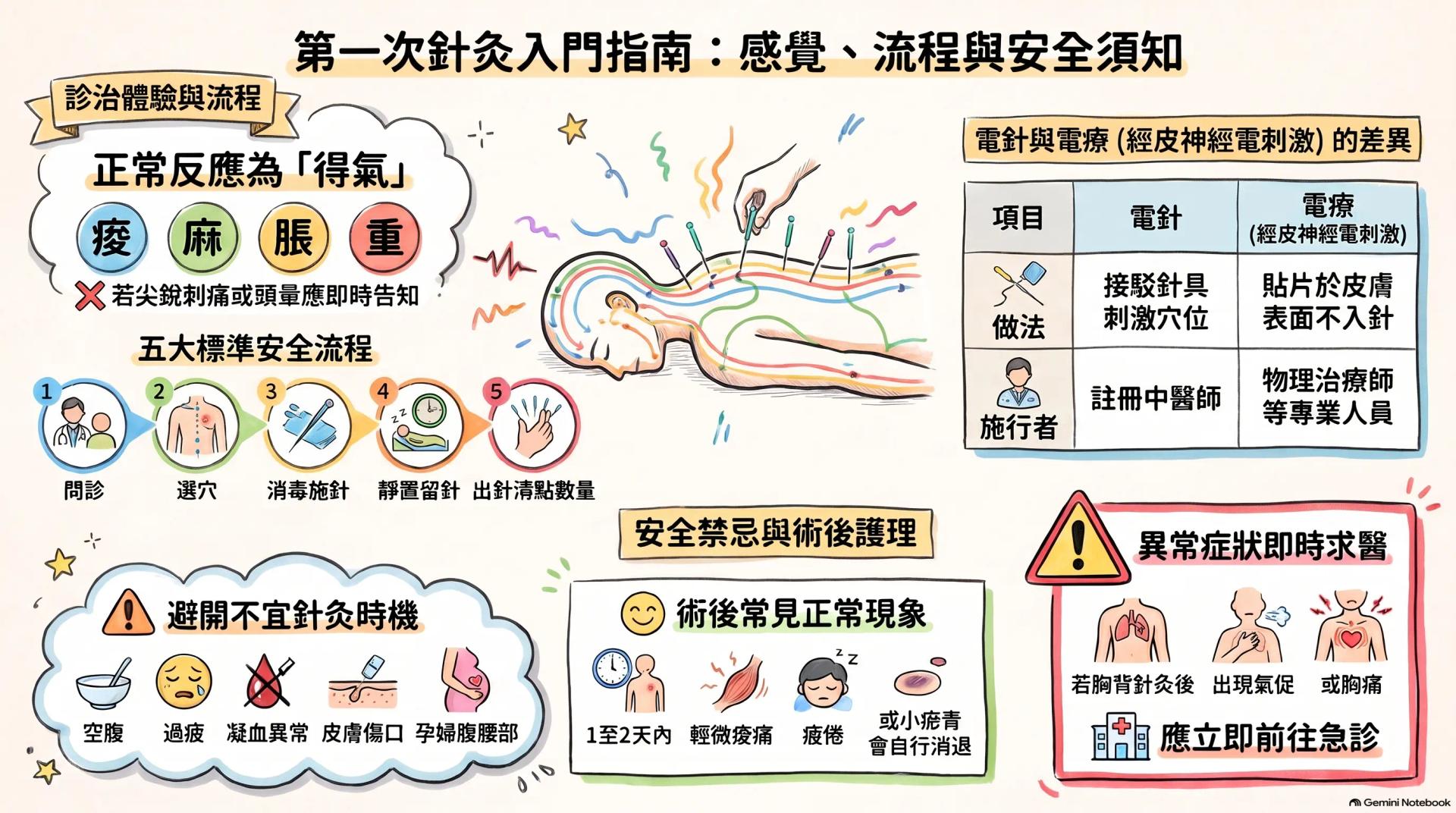
Does Acupuncture Hurt? What to Know Before Your First Visit
Does acupuncture hurt, and is feeling worse afterwards normal? Reviewed by Dr Wong, this guide covers the sensation, a typical session, electroacupuncture, session numbers and who should avoid it.
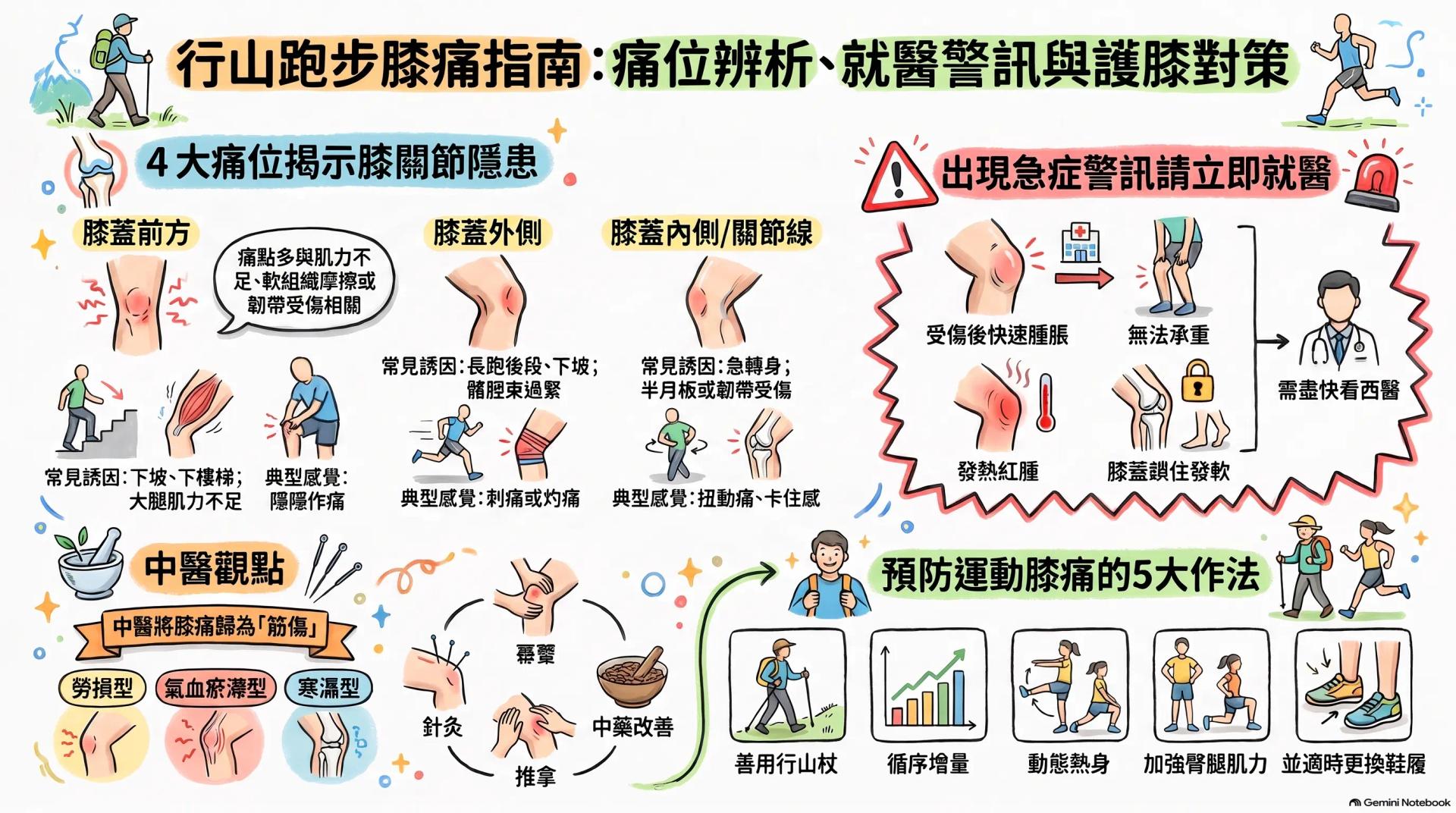
Knee Pain After Hiking or Running: TCM or Western Doctor?
Knee pain after a downhill hike or a long run? Reviewed by Dr Wong, this guide explains four common pain locations, warning signs that need a Western doctor, the TCM approach and prevention tips.
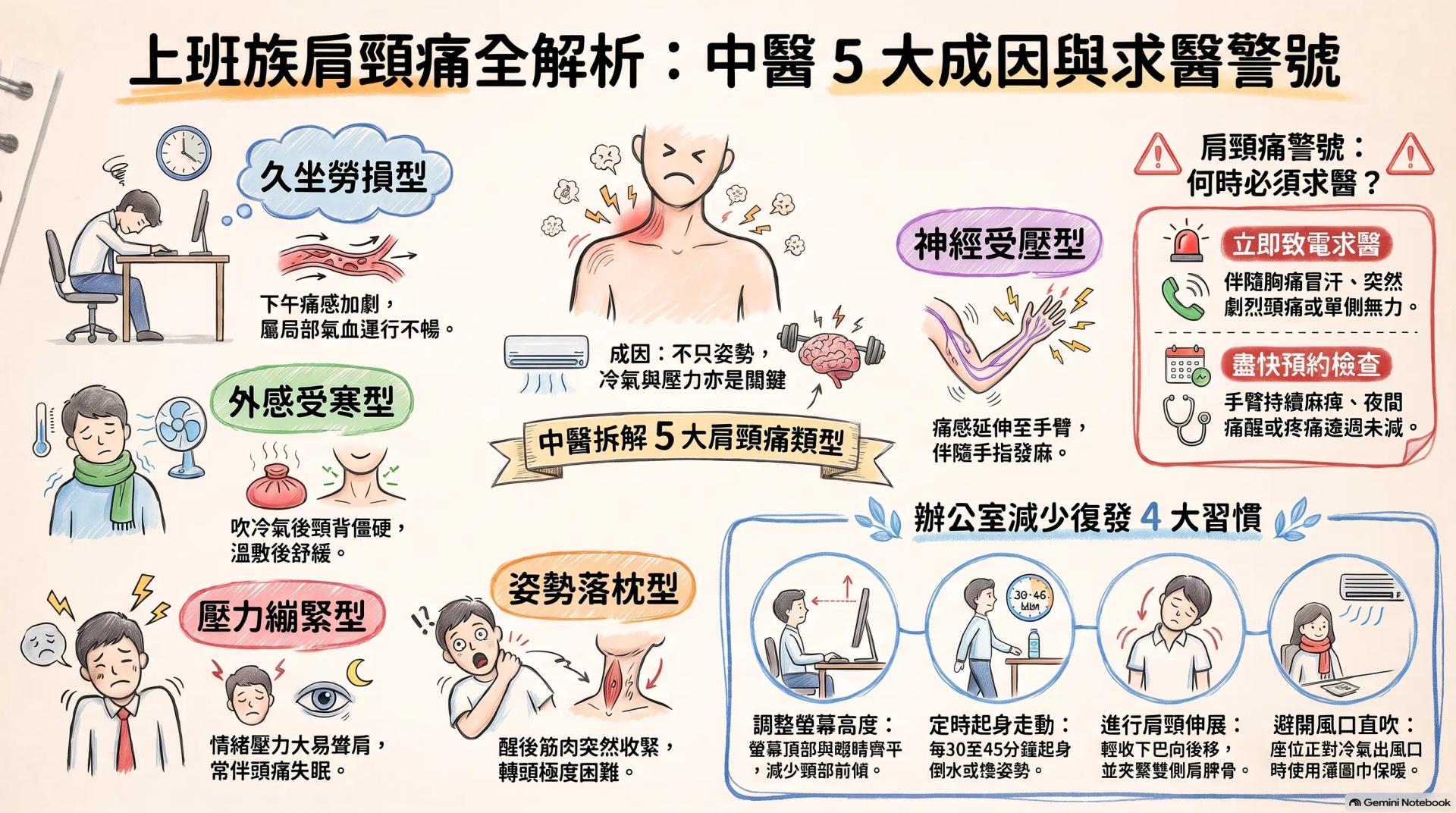
Office Neck and Shoulder Pain: 5 Causes and Warning Signs
Neck and shoulder pain at work is not just about posture. Reviewed by Dr Wong, this guide covers five common causes, the TCM approach, warning signs that need urgent care and simple office habits.