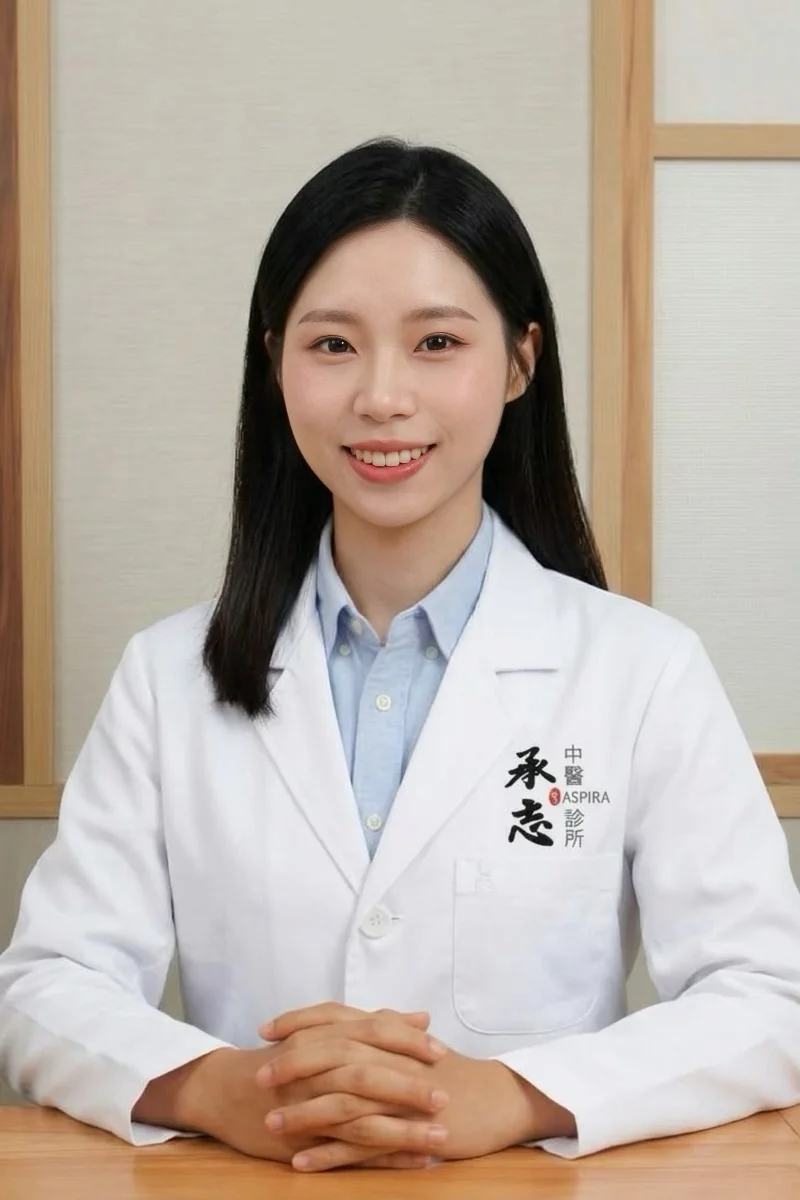
Dr. Tu Hsiang Ying, Sandy
Registered Chinese Medicine Practitioner
Registered TCM Practitioner (Reg. No.:010445)
Specialties
Profile
Dr. Tu focuses on the health of children and adolescents, combining paediatric tuina, visceral manipulation and exercise training to work on muscle balance and overall constitution. For adolescent posture, she pays attention to postural imbalance and scoliosis, emphasising physical assessment and regular exercise. In TCM aesthetics, she offers facial contouring and cosmetic acupuncture, and has experience with acupoint thread embedding. Having suffered from period pain when she was young, she was drawn to Chinese medicine. She is thorough and rigorous in consultation, values how patients feel, and believes treatment works best when practitioner and patient work together.
Qualifications
- Registered Chinese Medicine Practitioner (Hong Kong)
- Bachelor's Degree in Chinese Medicine, Nanjing University of Chinese Medicine
- Diploma of Proficiency, Biodynamic Model of Cranial Sacral Therapy (SBJ & TMJ), The Lyons Institute
- Atlas & Axis Adjustment Technique Training, Chinese Spine Health Research Centre
- A.N.R.M. 601: Advanced Neuromuscular Rehabilitation Application, Full Tech Academy
Education
- Nanjing University of Chinese MedicineBachelor of Chinese Medicine
Articles by Dr. Tu Hsiang Ying, Sandy
ADHD in Children: Symptoms and the TCM Approach
ADHD is a neurodevelopmental condition, not a parenting issue, and diagnosis must come from a developmental paediatrician or child psychiatrist. This article walks through the three ADHD presentations and their symptoms, the workup involved, four TCM pattern directions, how TCM can complement (not replace) mainstream treatment, five things parents can start today, and the warning signs that require Western medical attention first.
Kids Won't Eat? A TCM Perspective on the Causes and What Parents Can Do
Poor appetite in children is one of the most common parenting headaches. This article breaks down four common causes from a TCM perspective (spleen-stomach weakness, food retention, liver stagnation, post-viral effects), three things parents can start today, five common paediatric tuina techniques, three gentle food therapies, and the warning signs that warrant a paediatrician first.
Paediatric Allergic Rhinitis: A TCM Guide for Hong Kong Parents
A child who sneezes every morning with a blocked nose, rubs the nose and eyes, has dark under-eye shadows, sleeps poorly and struggles to concentrate at school — this is very likely allergic rhinitis. This article explains how to tell allergic rhinitis from a cold, how TCM works through lung, spleen and kidney insufficiency and a weak surface defence, treating the flare and the quiet phase differently, how the home dust-mite environment fits in, and when to see a Western doctor first.
Is My Child Growing Tall Enough? A TCM View of Growth and "Zhuan Gu"
When a child looks shorter than their peers, or grows only a little each year, parents naturally wonder about "bone transformation". This article first explains what normal growth is (the growth curve) and when to see a paediatric endocrinologist, then covers the key drivers of height (genetics, nutrition, sleep, exercise), and how TCM — through "the kidney governs the bones" and "the spleen and stomach are the foundation of later life" — conditions the spleen, stomach and kidney according to the stage of development. The point is to create good conditions for a child to grow, not to "force height", and no centimetre figure is promised.
Uneven Face: Side Sleeping, Chewing and Facial Acupuncture
Is an uneven face caused by side sleeping and chewing on one side? This article explains the common causes, when to see a dentist or doctor first, what to adjust day to day, and how TCM facial massage and facial acupuncture can help with contour differences caused by muscle tension.
Recurrent Low-Grade Fever in Children: Constipation and TCM
Why does a TCM practitioner ask about constipation when a child has a recurrent low-grade fever? This article first lists the warning signs that need a doctor, explains why infection must be ruled out first, then sets out how food stagnation is understood to cause fever, with home observation and care.
Poor Posture in Children: Scoliosis and Height Myths
Do crossed legs and homework on the stomach cause scoliosis, and does poor posture affect a child's height? This article clears up both worries using Scoliosis Research Society material, explains what long-term posture really affects, and covers good sitting, a 30-second wall check and a TCM posture assessment.
Scoliosis, Uneven Shoulders, Rounded Back in Children
What is the difference between scoliosis, uneven shoulders and a rounded back, and can they be fixed? This article compares the three in a table, explains why ages 10 to 12 need attention, a 30-second home check, when a full-spine X-ray is needed, and how a TCM posture assessment fits in.
Children and Fruit: Before or After Meals? TCM Fruit Guide
Should children eat fruit before or after meals? This article sets out what dietitians and TCM say, the daily fruit portions advised by Hong Kong's Department of Health, and a cooling, neutral and warming fruit list, so parents can adjust by their child's stools, cough and appetite.
Eczema in Children: How Long to Avoid Beef, Milk, Seafood?
Does a child with eczema need to avoid food? This article explains how long to avoid beef, milk and seafood, how TCM adjusts diet by pattern (damp-heat, weak spleen with dampness, blood deficiency with dryness), what medical research says, and why blind avoidance can leave a child short of nutrients.
Page content last updated:
Book now and start your health journey
Limited slots available today
Book via WhatsAppAspira TCM — Your path back to health